The Mecca Joint Deterrence Agreement will draw interest from additional regional governments, but any expansion will depend on whether Saudi Arabia, Turkiye and Pakistan can define consultation and response rules first.
This is one of the most consequential geopolitical developments in the window because it could reshape regional deterrence calculations well beyond the three signatories. The wording is broad enough to invite future expansion, but vague enough to create uncertainty in the meantime.
AI reasoning
This is one of the most consequential geopolitical developments in the window because it could reshape regional deterrence calculations well beyond the three signatories. The wording is broad enough to invite future expansion, but vague enough to create uncertainty in the meantime.
Curated summary
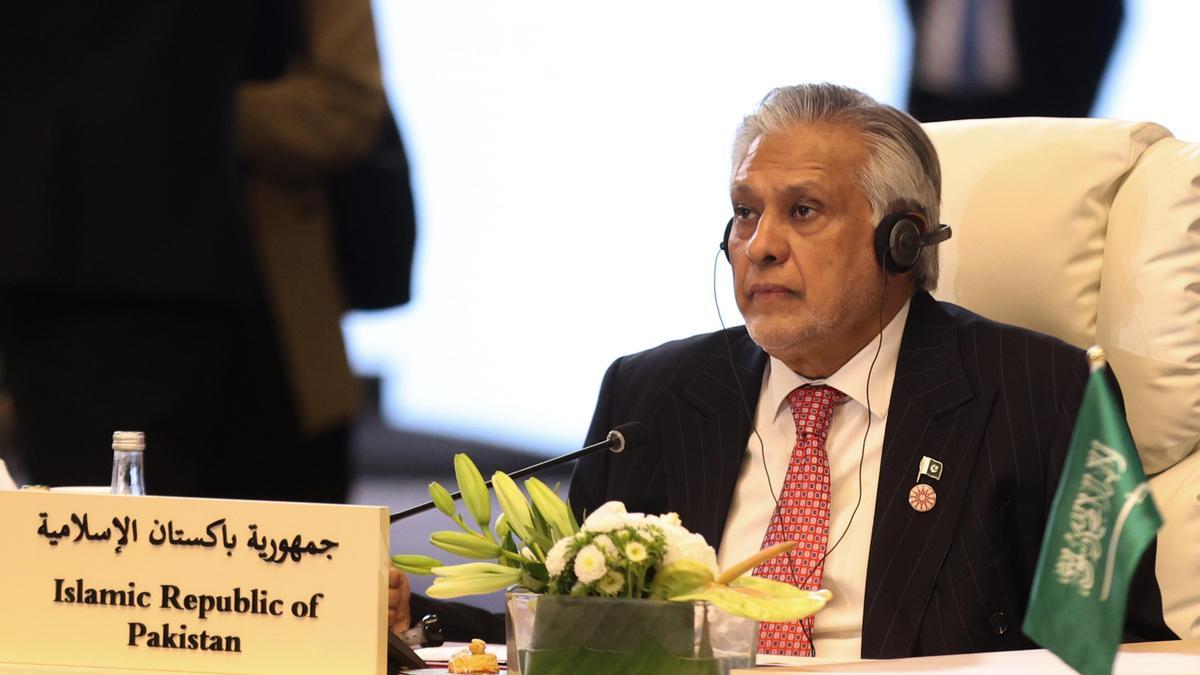
Pakistan says the new defense pact with Saudi Arabia and Turkiye is purely defensive, but the agreement itself is a major regional signal. Signed in Mecca by Mohammed bin Salman, Recep Tayyip Erdogan and Shehbaz Sharif, the deal says an armed attack on one signatory counts as an attack on all. Officials say it does not target Iran or replace existing alliances, but analysts are already treating it as the start of a new security architecture.
Supporting evidence
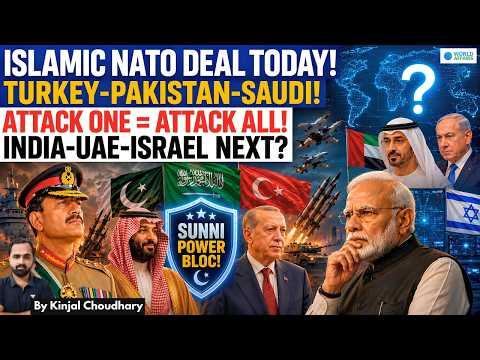 YouTube·World Affairs by Unacademy
Saudi, Pakistan & Turkey To Sign ISLAMIC NATO Today! India-Israel-UAE Counter Alliance Next? Kinjal
2h ago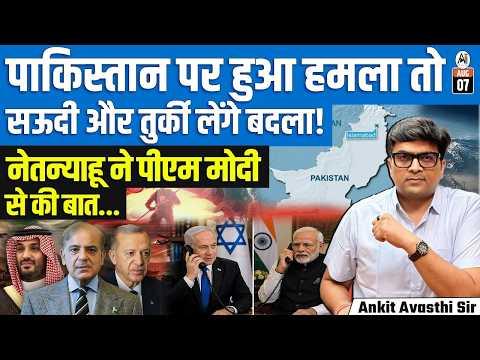 YouTube·Ankit Inspires India
Saudi Arabia, Turkey & Pakistan's New Defence Pact | What It Means for the Region | By Ankit Sir
2h ago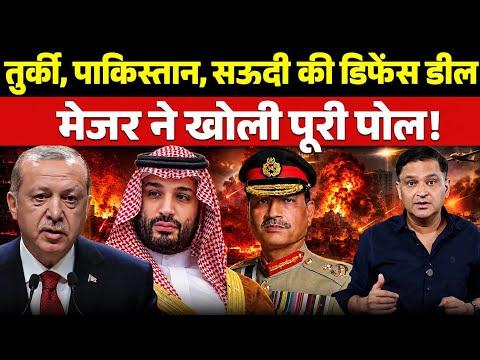 YouTube·THE CHANAKYA DIALOGUES HINDI
Turkey, Saudi Arabia, Pakistan to sign defence pact | The Chanakya Dialogues Major Gaurav Arya |
2h ago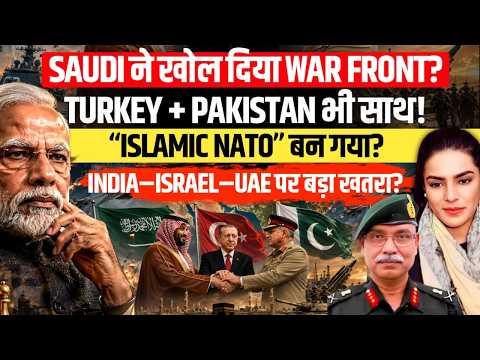 YouTube·Amber Zaidi Official
Saudi-Turkey-Pakistan Defence Pact: Is an Islamic NATO Emerging? | Gen Dushyant Singh | Amber Zaidi
2h ago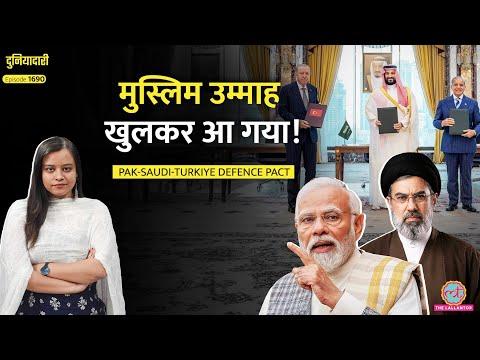 YouTube·The Lallantop
Pakistan, Turkey, Saudi Defence Deal, Iran के खिलाफ़ बड़ी साज़िश? India के लिए क्या खतरा? Duniyadari
2h ago YouTube·Pathan Bhai
Saudi Arabia, Turkey & Pakistan Join Forces in New Defence Pact | What It Means for India?
2h ago YouTube·The Deshbhakt
Turkey Joins Saudi-Pak Defence Alliance | Should Rise Of ‘Islamic NATO’ Worry India? |Akash Banerjee
2h ago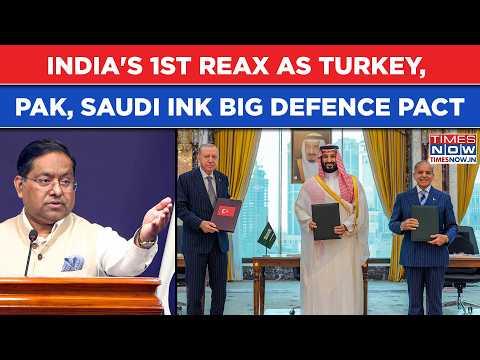 YouTube·Times Now
India's MEA Reacts As Pakistan, Turkey & Saudi Arabia Sign Defence Pact| Islamic NATO Takes Shape?
2h ago
Source news
Saudi Arabia, Turkiye and Pakistan formalize a mutual-defense pact
The Mecca Joint Deterrence Agreement says an attack on one signatory will be treated as an attack on all, with officials insisting it is defensive and open to others.